
Indian Wrestling's New Era: Rebuilding a Sport from the Clay Pit to the Olympic Mat
भारतीय कुश्ती इस समय परंपरा और आधुनिक खेल-विज्ञान के बीच संक्रमण काल में है। साक्षी मलिक के रियो 2016 कांस्य और विनेश फोगाट, बजरंग पूनिया व रवि कुमार दहिया की लगातार अंतरराष्ट्रीय सफलताओं ने खेल की दृश्यता और प्रायोजन बढ़ाया। मुख्य चुनौतियाँ हैं: जिला स्तर पर प्रशिक्षित कोचों की कमी, वजन प्रबंधन में वैज्ञानिक मार्गदर्शन का असमान वितरण, जूनियर से सीनियर संक्रमण में ड्रॉपआउट, वित्तपोषण का केंद्रीकरण और प्रशासनिक पारदर्शिता पर सवाल। समाधान के तीन स्तंभ: स्पष्ट वजन-श्रेणी रणनीति, अंतरराष्ट्रीय सर्किट में नियमित भागीदारी, और हर श्रेणी में बैकअप गहराई। साथ ही ग्रासरूट पर मैट, चिकित्सा किट, प्रशिक्षित कोच और पूर्व पहलवानों की भागीदारी सर्वाधिक प्रभावी निवेश है।
Every morning at half past four, the clay pit of a village akhara in Haryana is watered down and smoothed. Within minutes that mud becomes a surface on which two bodies collide, sweat mixes with earth, and one generation hands the next the craft that put India on the world wrestling map. The scene is as alive today as it was thirty years ago. But the system standing behind that scene — coaching, science, nutrition, injury management, administration and funding — has changed fundamentally over the past decade. Indian wrestling is in transition: its roots in tradition are deep, while the demands of modern sport science are new. This report tries to open up the layers of that transition.
The akhara: a cultural institution, not just a training hall
Wrestling in India was never treated as merely a sport. It has been a way of life with explicit rules of discipline, communal living and the guru-shishya tradition. Akharas across Uttar Pradesh, Haryana, the outskirts of Delhi, Punjab, Rajasthan and Madhya Pradesh produced wrestlers for generations. The tradition's greatest strength was its low barrier to entry — a poor farmer's son with the body and the will could find a stage. Economic background was rarely the main obstacle, which is why India's Olympic wrestling story has been dominated by small towns and villages.
But that same strength became a limitation. The akhara's knowledge was oral, not measurable. Technique passed through a guru's eye rather than video analysis or biomechanics. Nutrition was traditional — ghee, milk, almonds, buttermilk — generally useful, but a weight-category sport demands accounting for every calorie. Injuries were often treated with home remedies and rest. When rival nations took the sport into the laboratory, India had to connect its tradition to modern tools without discarding it. That is the central tension of the current phase.
Olympic medals changed perceptions
The shift in perception is credited to the medals won over the past decade. Sakshi Malik's bronze at the Rio Olympics was a door-opening moment for Indian women's wrestling. Vinesh Phogat then proved it was not an isolated success, winning repeated medals at World Championship and Asian Games level. In the men's draw, wrestlers like Bajrang Punia and Ravi Kumar Dahiya kept Indian wrestling permanently in the conversation through the Tokyo cycle. The effect went beyond the medal table: state associations, sports authorities and private sponsors began paying attention.
The most important change was in parents' thinking. Wrestling was once seen as physical labour and a traditional hobby. When village girls appeared on the Olympic podium on television, more families in small towns began sending their daughters to akharas. Small in numbers, this shift is socially enormous.
Women's wrestling: the fastest-growing segment
Women's wrestling is the most promising story in Indian wrestling. Akharas that trained only men for decades are now creating separate schedules for girls. In several places women coaches have been appointed — both a practical need and a signal of cultural acceptance. Participation of women wrestlers in national camps is rising steadily, and junior-level numbers are clearly growing.
Challenges remain. Akharas with safe accommodation, toilets and changing rooms are still a minority. Open conversation about menstruation and weight management is only slowly developing. Scientific guidance on weight-cutting for women wrestlers is still uneven. That these issues are now discussed at all is itself progress — previously they were not considered part of the sport.
The coaching system: quality and its gap
Coaching is Indian wrestling's biggest structural question. The pool of experienced coaches is limited and geographically concentrated. A talented wrestler's future often depends on which akhara he or she could reach — a lottery that institutional arrangements should replace. National centres of excellence and sports authority schemes have bridged part of the gap, but the shortage of trained coaches at district level remains stark.
On the technical side, an important debate concerns which style Indian wrestlers are traditionally strong in. India's achievements in freestyle far exceed those in Greco-Roman, where holds below the waist are restricted and the entire technical framework changes. The traditional technique of Indian akharas is closer to freestyle, so building deep Greco-Roman expertise requires a separate training ecology — different coaches, different training partners, a different competition calendar. Some states have made a start, but it is early.
Sports science: the link that joined last
Weight management is the most sensitive subject in modern wrestling. Traditional methods — prolonged hunger, restricted water, running in heavy clothing, excessive sauna use — can deliver short-term performance but cause long-term damage and rob an athlete of strength the next day. The modern sports-science approach prescribes gradual, controlled and measurable weight loss, including body composition analysis, hydration monitoring and pre-competition refuelling.
India has moved in this direction, but unevenly. Physiotherapists, nutritionists and strength and conditioning specialists are now normal at national camps. At district and block level such support remains rare — precisely where most talent emerges. This is where the biggest investment is needed, because poor weight management at 16-19 can permanently damage a career.
Injury management matters just as much. Wrestling places constant stress on knees, shoulders, hips and the neck. Ligament injuries, shoulder dislocations and lower-back problems are common. Without screening, prehabilitation and timely rehabilitation, a small injury can end a career. Countries that invested here found athletes' shelf life lengthened and availability for major events improved.
The junior pipeline: strength and gaps
India's greatest strength is its junior pipeline. India wins international medals consistently at sub-junior and junior level. But converting junior success into senior success is not always smooth. The reason is structural rather than technical: weight categories change, the level of competition jumps, and training continuity breaks.
Another reason is financial. Support and state sponsorship are often adequate up to junior level, but the senior international circuit costs more — overseas camps, foreign coaches, European Grand Prix entries. Wrestlers caught in this gap often quit at 22-24, exactly when they should be peaking. Preventing this dropout is Indian wrestling's most practical challenge.
Administration: a question of trust
Any sport's ecosystem is only as strong as its administration. Questions about administrative stability and transparency have recurred in Indian wrestling. Athletes' grievances, disputes over selection, controversies in coaching appointments and poor coordination between bodies all directly affect performance.
The answer is not merely new elections. What is needed is clear, public selection criteria open to scrutiny; an independent grievance redressal mechanism where athletes can speak without fear of retaliation; and a formal place for sports-science experts in decision-making, so that selection is not based only on seniority and position. Countries that did this found stability in performance.
Money and sponsorship: growing interest, uneven distribution
Corporate sponsorship of wrestling has grown in recent years, driven largely by television and digital audiences. But the money is highly concentrated — a few dozen top wrestlers and a handful of akharas. Resources at the lower levels remain scarce.
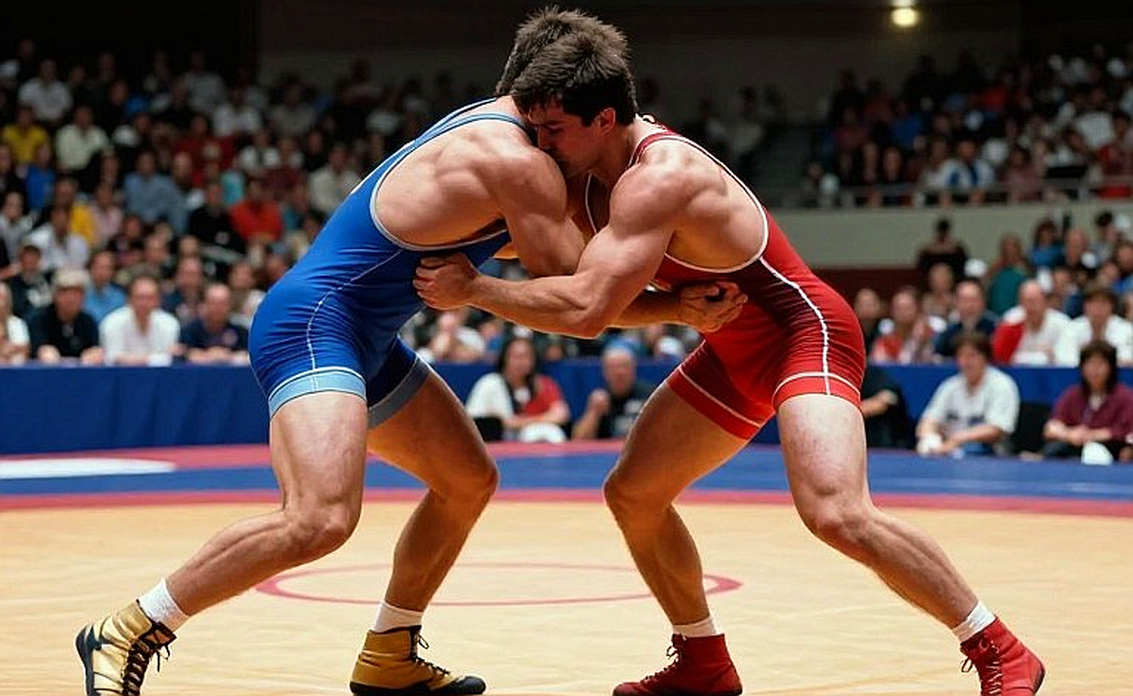
A practical solution is a stronger calendar of state-level leagues and local competitions. When a district wrestler gets six to eight competitive bouts a year, development accelerates and earning opportunities appear. Some states have started such leagues, but they need both sustainability and media coverage.
Technology and analysis: the new front
Video analysis has become essential in modern wrestling. An opponent's habits, favourite hold, tiring point and scoring patterns are all available as data. India's top wrestlers use it, but the practice still depends on individual initiative rather than an institutional system.
A strong national analysis cell should build profiles of international rivals in every weight category and deliver them to coaches in accessible language. The investment is not expensive, but the impact on training quality is direct.
Mental health: the overlooked dimension
Weight-category sports carry exceptional mental pressure. Constant worry about making weight, fear of injury, uncertainty over selection and the grind of back-to-back events produce burnout. In the Indian system psychological support is still treated as a luxury when it should be basic.
Many wrestlers lose confidence during a comeback from injury and receive no formal help. An accessible, confidential counselling system is necessary both morally and practically.
The next Olympic cycle: what the strategy should be
India's strategy for the coming Olympic cycle should rest on three pillars. First, clear identification of weight categories — where India has genuine medal potential and where long-term investment is needed. Second, international competition experience; global performance is impossible without regular participation in European and Asian circuits. Third, backup depth — two or three athletes per category so that injury or loss of form does not derail a whole campaign.
There is a fourth, less discussed element: transition management. When a senior wrestler retires, experience is lost. Keeping that person in coaching, mentoring or analysis roles preserves institutional knowledge. Some countries have systematised this and benefited.
Grassroots: investing where the impact is largest
The biggest return comes at the lowest level. Ensuring mats, basic gym equipment, first-aid kits and one trained coach in district akharas may matter more than any large campaign. Similarly, making wrestling part of the formal school sports curriculum widens talent identification.
Another practical step is connecting former wrestlers to village-level akharas with respect and modest remuneration. This solves two problems at once: training quality improves and former athletes gain a livelihood.
Conclusion: balancing tradition and science
Indian wrestling does not face one great crisis; it faces several small, interlinked structural issues — unequal coaching, concentrated funding, a deficit of administrative trust, uneven access to sports science and a break in the junior-to-senior transition. None is unique and none is insoluble.
The greatest strength is that the sport's roots are deep. The clay akhara is still where discipline is taught, where a child first learns to lose and then to rise. Modernity does not require removing that tradition. It requires adding measurement, science, transparency and care to it.
The day a district-level akhara in India treats a trained coach, a physiotherapist and a clear selection process as normal, Indian wrestling's real new era will begin. Medals will follow naturally — they are the result, not the goal.